



Catalog: YN1565
Size
Price
Status
Qty.
200μL
$450.00
4 weeks
0
100μL
$280.00
4 weeks
0
40μL
$150.00
4 weeks
0
Add to cart


Collected
Collect
Main Information
Target
CCNT1
Host Species
Rabbit
Reactivity
Human, Mouse
Applications
WB, ELISA
MW
79kD (Observed)
Conjugate/Modification
Unmodified
Detailed Information
Recommended Dilution Ratio
WB 1:500-2000; ELISA 1:5000-20000
Formulation
Liquid in PBS containing 50% glycerol, 0.5% BSA and 0.02% sodium azide.
Specificity
CCNT1 Polyclonal Antibody detects endogenous levels of protein.
Purification
The antibody was affinity-purified from rabbit antiserum by affinity-chromatography using epitope-specific immunogen.
Storage
-15°C to -25°C/1 year (Do not lower than -25°C)
Concentration
1 mg/ml
MW(Observed)
79kD
Modification
Unmodified
Clonality
Polyclonal
Isotype
IgG
Related Products
Secondary Antibodies
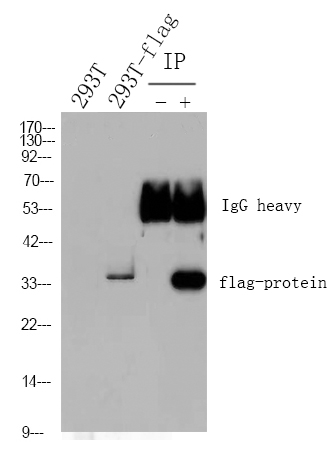
Goat Anti Mouse IgG(H+L) (HRP)
RS0001
More→
Secondary Antibodies
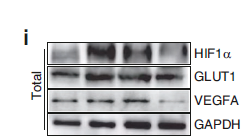
Goat Anti Rabbit IgG(H+L) (HRP)
RS0002
More→
Primary Antibodies
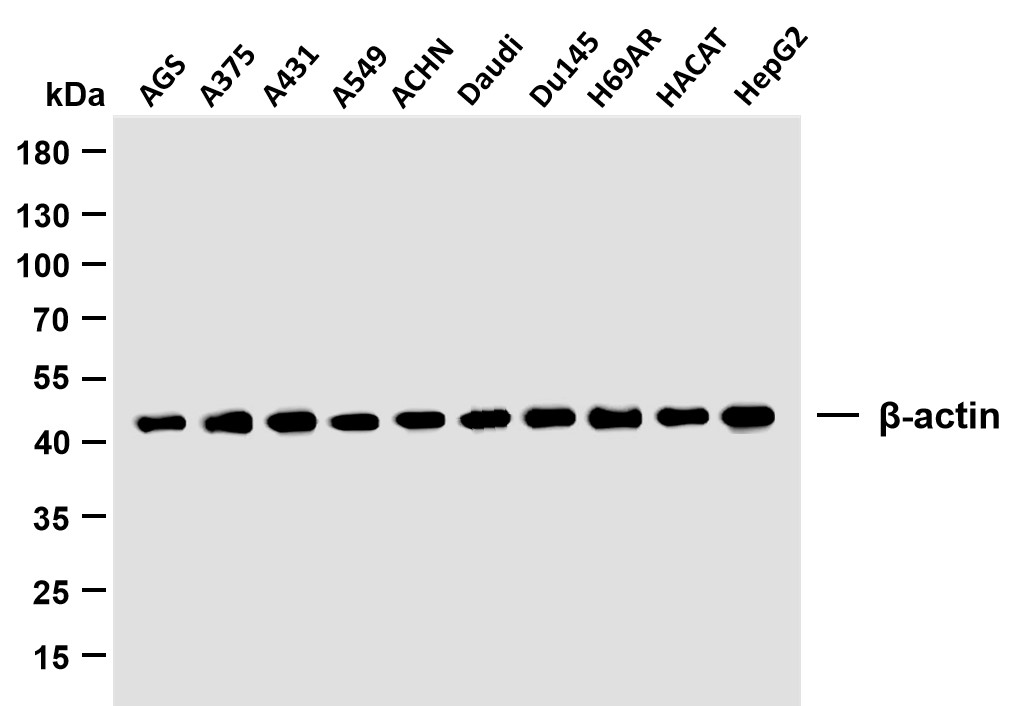
β-actin (PTR2364) Mouse mAb
YM3028
More→
Primary Antibodies
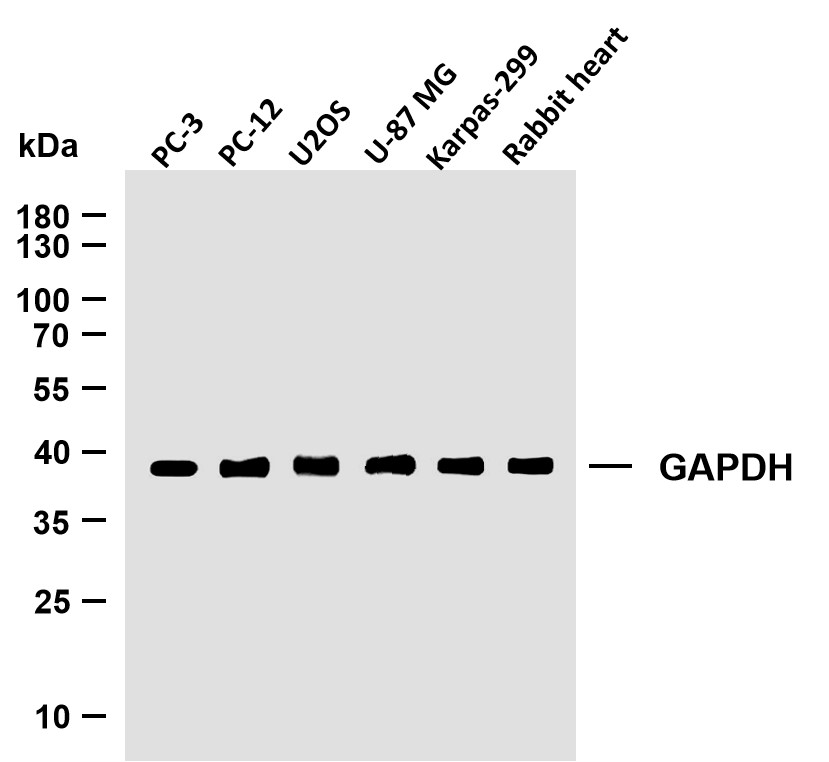
GAPDH (PTR2304) Mouse mAb
YM3029
More→
Antigen&Target Information
Immunogen:
Synthesized peptide derived from human protein . at AA range: 220-300
show all
Specificity:
CCNT1 Polyclonal Antibody detects endogenous levels of protein.
show all
Gene Name:
CCNT1
show all
Protein Name:
Cyclin-T1 (CycT1) (Cyclin-T)
show all
Background:
This gene encodes a member of the highly conserved cyclin C subfamily. The encoded protein tightly associates with cyclin-dependent kinase 9 , and is a major subunit of positive transcription elongation factor b (p-TEFb) . In humans , there are multiple forms of positive transcription elongation factor b , which may include one of several different cyclins along with cyclin-dependent kinase 9. The complex containing the encoded cyclin and cyclin-dependent kinase 9 acts as a cofactor of human immunodeficiency virus type 1 (HIV-1) Tat protein , and is both necessary and sufficient for full activation of viral transcription. This cyclin and its kinase partner are also involved in triggering transcript elongation through phosphorylation of the carboxy-terminal domain of the largest RNA polymerase II subunit. Overexpression of this gene is implicated in tumor growth. Alternative splicing results in multiple transcrip
show all
Function:
Function:Regulatory subunit of the cyclin-dependent kinase pair (CDK9/cyclin-T1) complex , also called positive transcription elongation factor B (P-TEFb) , which is proposed to facilitate the transition from abortive to productive elongation by phosphorylating the CTD (carboxy-terminal domain) of the large subunit of RNA polymerase II (RNA Pol II) . In case of HIV or SIV infections , binds to the transactivation domain of the viral nuclear transcriptional activator , Tat , thereby increasing Tat's affinity for the transactivating response RNA element (TAR RNA) . Serves as an essential cofactor for Tat , by promoting RNA Pol II activation , allowing transcription of viral genes. ,miscellaneous:Interaction between Tat and cyclin-T1 requires zinc. ,similarity:Belongs to the cyclin family. Cyclin C subfamily. ,subunit:Cyclin-T1 is the predominant cyclin that associates with CDK9 to form a heterodimer called P-TEFb. P-TEFb forms a complex with AFF4/AF5Q31. Interacts with the transactivation region of HIV-1 , HIV-2 and SIV Tat. Component of a complex which is at least composed of HTATSF1/Tat-SF1 , P-TEFb complex , RNA pol II , SUPT5H , and NCL/nucleolin. Component of the 7SK snRNP complex at least composed of P-TEFb (composed of CDK9 and CCNT1/cyclin-T1) , HEXIM1 , HEXIM2 , BCDIN3 , SART3 proteins and 7SK and U6 snRNAs. Interacts with MDFIC. ,tissue specificity:Ubiquitously expressed. ,
show all
Cellular Localization:
Nucleus .
show all
Tissue Expression:
show all
Research Areas:
>>Viral life cycle - HIV-1 ;
>>Transcriptional misregulation in cancer
>>Transcriptional misregulation in cancer
show all
Reference Citation({{totalcount}})
Catalog: YN1565
Size
Price
Status
Qty.
200μL
$450.00
4 weeks
0
100μL
$280.00
4 weeks
0
40μL
$150.00
4 weeks
0
Add to cart
Collected
Collect
Recently Viewed Products
Clear allPRODUCTS
CUSTOMIZED
ABOUT US


Toggle night Mode
{{pinfoXq.title || ''}}
Catalog: {{pinfoXq.catalog || ''}}
Filter:
All
{{item.name}}
{{pinfo.title}}
-{{pinfo.catalog}}
Main Information
Target
{{pinfo.target}}
Reactivity
{{pinfo.react}}
Applications
{{pinfo.applicat}}
Conjugate/Modification
{{pinfo.coupling}}/{{pinfo.modific}}
MW (kDa)
{{pinfo.mwcalc}}
Host Species
{{pinfo.hostspec}}
Isotype
{{pinfo.isotype}}
Product {{index}}/{{pcount}}
Prev
Next
{{pvTitle}}
Scroll wheel zooms the picture
{{pvDescr}}