






Catalog: YM8069
Size
Price
Status
Qty.
200μL
$600.00
3 weeks
0
100μL
$340.00
3 weeks
0
40μL
$190.00
3 weeks
0
Add to cart


Collected
Collect
Main Information
Target
TDP43
Host Species
Rabbit
Reactivity
Human, Mouse, Rat
Applications
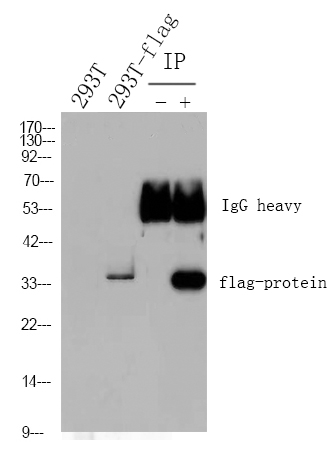
WB, IHC, IF, IP, ELISA
MW
45kD (Calculated)
45kD (Observed)
Conjugate/Modification
Unmodified
Detailed Information
Recommended Dilution Ratio
IHC 1:200-1:1000; WB 1:1000-1:5000; IF 1:200-1:1000; ELISA 1:5000-1:20000; IP 1:50-1:200,
Formulation
PBS, 50% glycerol, 0.05% Proclin 300, 0.05%BSA
Specificity
Endogenous
Purification
Recombinant Antibody expressed in animal component-free (ACF) media, purified via Protein A affinity chromatography.
Storage
-15°C to -25°C/1 year (Do not lower than -25°C)
MW(Calculated)
45kD
MW(Observed)
45kD
Modification
Unmodified
Clonality
Monoclonal
Clone Number
PT0126R
Isotype
IgG, Kappa
Related Products
Secondary Antibodies
Goat Anti Mouse IgG(H+L) (HRP)
RS0001
More→
Secondary Antibodies
Goat Anti Rabbit IgG(H+L) (HRP)
RS0002
More→
Primary Antibodies
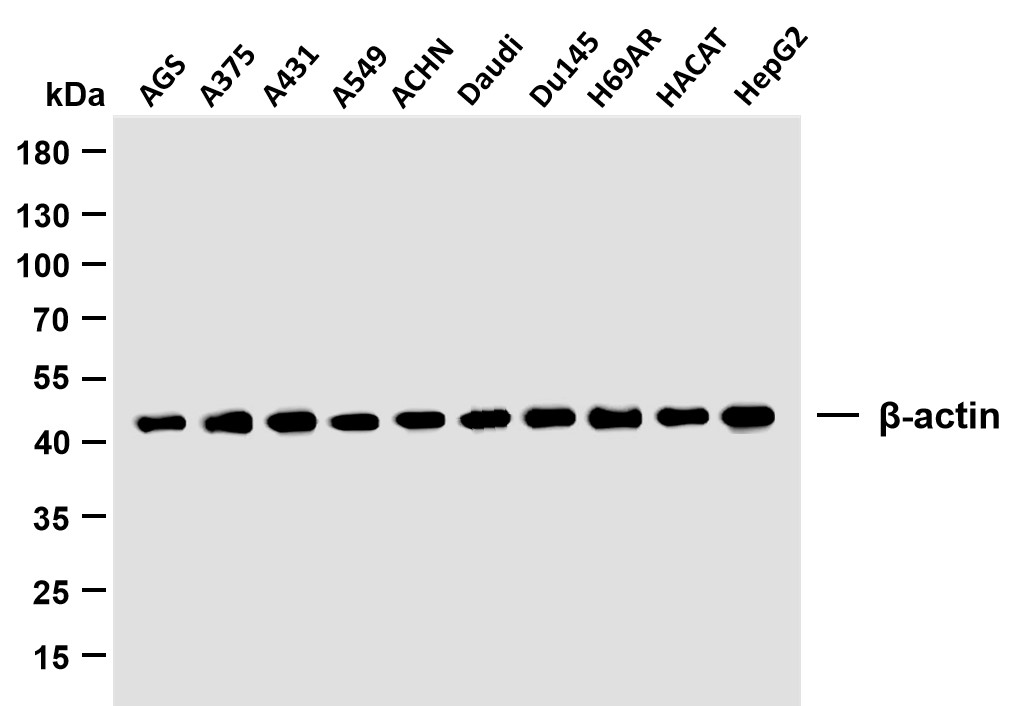
β-actin (PTR2364) Mouse mAb
YM3028
More→
Primary Antibodies
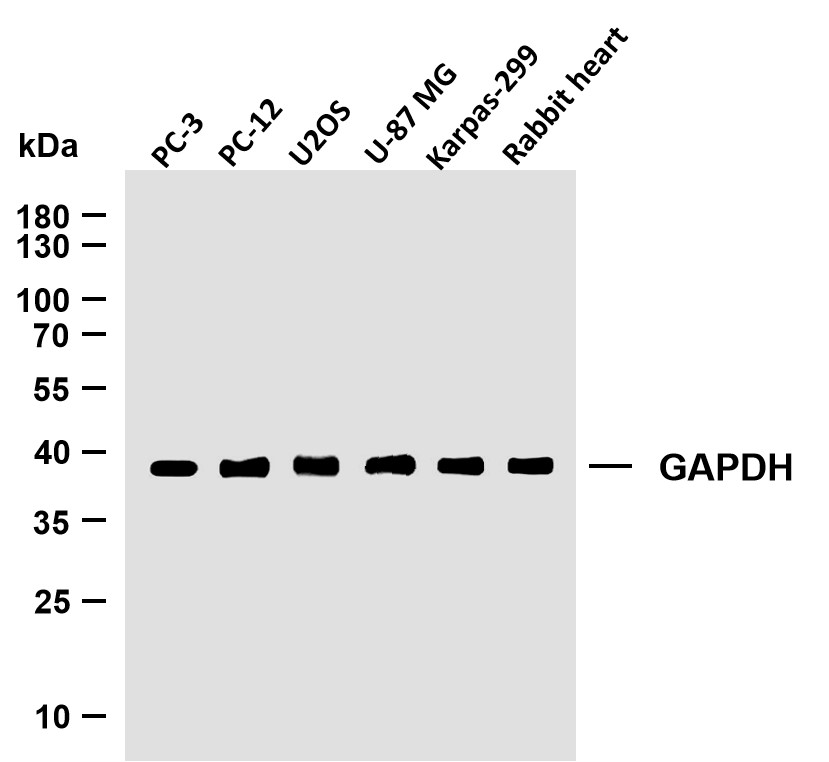
GAPDH (PTR2304) Mouse mAb
YM3029
More→
Antigen&Target Information
Immunogen:
The specific immunogen used to produce this antibody is proprietary information.
show all
Specificity:
Endogenous
show all
Gene Name:
TARDBP TDP43
show all
Protein Name:
TAR DNA-binding protein 43 (TDP-43)
show all
Background:
TAR DNA binding protein (TARDBP) Homo sapiens HIV-1 , the causative agent of acquired immunodeficiency syndrome (AIDS) , contains an RNA genome that produces a chromosomally integrated DNA during the replicative cycle. Activation of HIV-1 gene expression by the transactivator Tat is dependent on an RNA regulatory element (TAR) located downstream of the transcription initiation site. The protein encoded by this gene is a transcriptional repressor that binds to chromosomally integrated TAR DNA and represses HIV-1 transcription. In addition , this protein regulates alternate splicing of the CFTR gene. A similar pseudogene is present on chromosome 20. [provided by RefSeq , Jul 2008] ,
show all
Function:
Disease:Defects in TARDBP are a cause of amyotrophic lateral sclerosis type 10 (ALS10) [MIM:612069]. ALS is a neurodegenerative disorder affecting upper and lower motor neurons and resulting in fatal paralysis. Sensory abnormalities are absent. Death usually occurs within 2 to 5 years. The etiology of ALS is likely to be multifactorial , involving both genetic and environmental factors. TARDBP is the primary component of ubiquitin-positive inclusion bodies found in ALS and in frontotemporal lobar degeneration with ubiquitin-positive inclusions (FTLDU) . ,Function:DNA and RNA-binding protein which regulates transcription and splicing. Involved in the regulation of CFTR splicing. It promotes CFTR exon 9 skipping by binding to the UG repeated motifs in the polymorphic region near the 3'-splice site of this exon. The resulting aberrant splicing is associated with pathological features typical of cystic fibrosis. May also be involved in microRNA biogenesis , apoptosis and cell division. Can repress HIV-1 transcription by binding to the HIV-1 long terminal repeat. ,PTM:Cleaved to generate C-terminal fragments in hippocampus , neocortex , and spinal cord from individuals affected with ALS and FTLDU. ,PTM:Hyperphosphorylated in hippocampus , neocortex , and spinal cord from individuals affected with ALS and FTLDU. ,PTM:Ubiquitinated in hippocampus , neocortex , and spinal cord from individuals affected with ALS and FTLDU. ,similarity:Contains 2 RRM (RNA recognition motif) domains. ,subcellular location:Eliminated from nuclei of ubiquitinated inclusion-bearing neurons in FTLDU. ,subunit:Binds specifically to pyrimidine-rich motifs of TAR DNA and to single stranded TG repeated sequences. Binds to RNA , specifically to UG repeated sequences with a minimun of six contiguous repeats. ,tissue specificity:Ubiquitously expressed. In particular , expression is high in pancreas , placenta , lung , genital tract and spleen. ,
show all
Cellular Localization:
Nucleus
show all
Tissue Expression:
Research Areas:
>>mRNA surveillance pathway ;
>>Amyotrophic lateral sclerosis ;
>>Pathways of neurodegeneration - multiple diseases
>>Amyotrophic lateral sclerosis ;
>>Pathways of neurodegeneration - multiple diseases
show all
Signaling Pathway
Reference Citation({{totalcount}})
Catalog: YM8069
Size
Price
Status
Qty.
200μL
$600.00
3 weeks
0
100μL
$340.00
3 weeks
0
40μL
$190.00
3 weeks
0
Add to cart
Collected
Collect
Recently Viewed Products
Clear allPRODUCTS
CUSTOMIZED
ABOUT US


Toggle night Mode
{{pinfoXq.title || ''}}
Catalog: {{pinfoXq.catalog || ''}}
Filter:
All
{{item.name}}
{{pinfo.title}}
-{{pinfo.catalog}}
Main Information
Target
{{pinfo.target}}
Reactivity
{{pinfo.react}}
Applications
{{pinfo.applicat}}
Conjugate/Modification
{{pinfo.coupling}}/{{pinfo.modific}}
MW (kDa)
{{pinfo.mwcalc}}
Host Species
{{pinfo.hostspec}}
Isotype
{{pinfo.isotype}}
Product {{index}}/{{pcount}}
Prev
Next
{{pvTitle}}
Scroll wheel zooms the picture
{{pvDescr}}